

Ptosis
Abnormal drooping of the upper eyelid
At Sutherland Eye Surgeons, our oculoplastic surgeons offer precise ptosis repair surgery to lift the eyelid, restore a natural appearance, and expand your field of sight.
What is ptosis?
Ptosis (pronounced "toe-sis") refers to the abnormal drooping of the upper eyelid. When the eyelid muscles weaken or become disinserted, the eyelid descends, potentially obstructing vision.
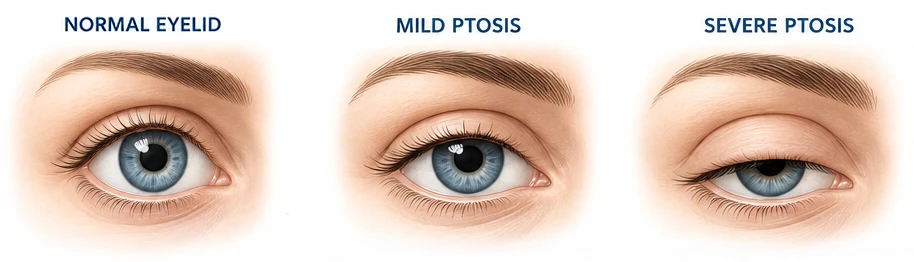
Symptoms of ptosis
The most obvious symptom is a drooping eyelid, which may affect one eye (unilateral) or both eyes (bilateral).
Patients with ptosis may also find themselves unconsciously lifting their eyelids with their brow muscles, which can lead to headaches, eye strain, and fatigue by the end of the day. In severe cases, the eyelid may completely cover the pupil, significantly restricting vision.
Assessing ptosis
When you visit us at Sutherland Eye Surgeons, some of the tests that we perform may include:
Visual acuity testing
Assessment of your best corrected visionExternal eyelid examination
Evaluation of eyelid position, symmetry, and the presence of any associated conditions such as dermatochalasis (excess skin) or brow ptosis (drooping eyebrows)Measurement of eyelid position
Including the Margin Reflex Distance (MRD), which measures the gap between the light reflex on the cornea and the upper eyelid margin. An MRD of 1 mm or less often indicates significant ptosisLevator function assessment
Measurement of eyelid excursion to determine the strength of the levator muscle. This guides the choice of surgical techniqueSlit lamp examination
Assessment of the ocular surface, cornea, and conjunctiva for signs of exposure or irritationVisual field testing
Formal perimetry with the eyelid in its natural position and with the eyelid taped up. This demonstrates the degree of functional obstruction and may be required for Medicare rebate eligibilityPhotographic documentation
Baseline photographs to document the degree of ptosis and monitor for progressionFatigue testing
If myasthenia gravis is suspected, your specialist may test for improvement in ptosis with rest or following ice applicationNeurological evaluation
If neurogenic ptosis is suspected, further assessment of pupillary responses and extraocular movements may be performed
Treatment of ptosis
The goal of ptosis repair is to elevate the eyelid to a normal position, restoring symmetry and expanding the visual field. The specific technique depends on the type and severity of ptosis, as well as the strength of the levator muscle.
Where brow ptosis contributes to the droop, a brow lift may be performed concurrently. If excess upper eyelid skin is also present, combined ptosis repair and blepharoplasty can address both function and appearance. When excess skin alone is obstructing the visual field and meets Medicare criteria, upper lid blepharoplasty may be performed on its own, typically bilaterally to ensure symmetry. Most patients experience significant improvement in both vision and appearance following surgery.
Is a droopy eyelid affecting your vision?
If a drooping eyelid is interfering with your vision or daily activities, contact Sutherland Eye Surgeons for a specialist ptosis assessment. We'll identify the underlying cause and recommend the best surgical procedure that can improve both your vision and your appearance.
For all appointments and enquiries, please phone 02 9521 8402
Monday
Tuesday
Wednesday
Thursday
Friday
8:30am – 5:00pm
8:30am – 5:00pm
8:30am – 5:00pm
8:30am – 5:00pm
8:30am – 5:00pm
Suite 5, Level 1
570 President Ave
Sutherland NSW 2232
Website by: 