

Dry Eye Syndrome
Insufficient or poor quality tear production
At Sutherland Eye Surgeons, we can diagnose what is causing your dry eyes and provide you with definitive treatment options so you're not just relying on eye drops.
What is dry eye syndrome?
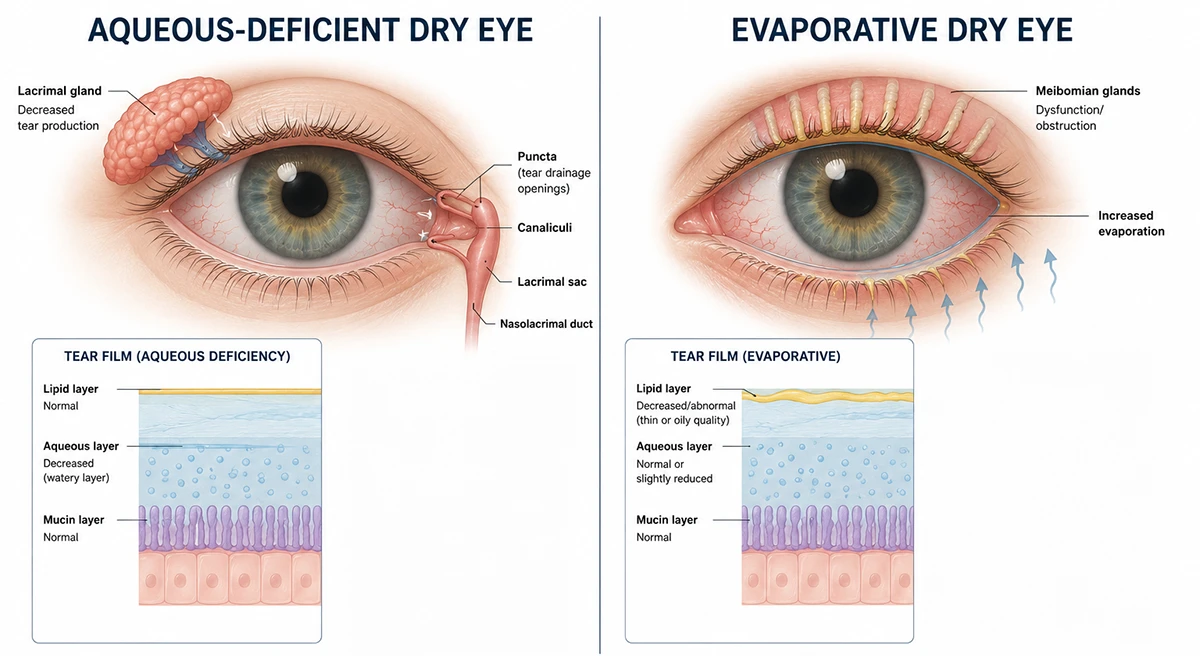
Dry eye syndrome is a chronic multifactorial condition characterised by insufficient tear production, poor quality tears, or excessive tear evaporation. The tear film consists of three layers: an outer lipid (oil) layer produced by meibomian glands, a middle aqueous (water) layer produced by lacrimal glands, and an inner mucin layer produced by goblet cells. Dysfunction in any of these layers compromises tear film stability, leading to ocular surface inflammation, discomfort, and visual disturbance.
The condition is broadly classified into two types: aqueous deficient dry eye (reduced tear production) and evaporative dry eye (excessive tear evaporation, most commonly due to meibomian gland dysfunction). Many patients have a combination of both. Risk factors include advancing age, female gender, contact lens wear, autoimmune conditions (such as Sjögren's syndrome), medications (including antihistamines and antidepressants), and prolonged screen use.
Symptoms of dry eye syndrome
Symptoms vary widely and may include:
- Stinging, burning, or scratchy sensation
- Gritty or foreign body feeling
- Redness and irritation
- Light sensitivity (photophobia)
- Blurred or fluctuating vision, particularly with prolonged reading or screen use
- Paradoxical excess tearing (reflex tearing from ocular surface irritation)
- Difficulty wearing contact lenses
- Eye fatigue and discomfort that worsens as the day progresses
Assessing dry eye syndrome
When you visit us at Sutherland Eye Surgeons, some of the tests that we perform may include:
Visual acuity assessment
Evaluation of any visual disturbanceSlit lamp examination
Assessment of the ocular surface, eyelids, meibomian gland openings, and tear film, including evaluation for blepharitis and meibomian gland dysfunctionTear film break up time (TBUT)
A dye is instilled, and the time taken for dry spots to appear on the cornea is measured; a rapid break up time indicates evaporative dry eyeOcular surface staining
Fluorescein or lissamine green dye highlights areas of corneal or conjunctival damageSchirmer's test
A small strip of filter paper is placed under the lower eyelid to measure tear production over five minutesMeibomian gland assessment
Digital expression of meibomian glands to assess the quality and quantity of oil secretion, along with meibography (non-invasive imaging of the glands)
Treatment of dry eye syndrome
Our approach is tailored to the specific subtype and severity of your dry eye disease, offering advanced therapies that go beyond basic lubricants.
For patients with persistent dry eye symptoms, prescription topical agents are often the first step. Immunomodulatory drops work by reducing ocular surface inflammation and improving natural tear production over several months of regular use. Alternative anti-inflammatory drops help break the inflammatory cycle that perpetuates dry eye disease. For acute flares, short term corticosteroid drops may be prescribed to quickly reduce inflammation and provide symptomatic relief, though these are typically used for limited periods under careful supervision.
Are dry eyes a source of constant irritation for you?
Find out what is causing your dry eyes and what modern treatment options are available for you. Contact Sutherland Eye Surgeons today to schedule a comprehensive assessment.
For all appointments and enquiries, please phone 02 9521 8402
Monday
Tuesday
Wednesday
Thursday
Friday
8:30am – 5:00pm
8:30am – 5:00pm
8:30am – 5:00pm
8:30am – 5:00pm
8:30am – 5:00pm
Suite 5, Level 1
570 President Ave
Sutherland NSW 2232
Website by: 