

Diabetic Eye Disease
Diabetes-related damage to retinal blood vessels
If you have diabetes, here at Sutherland Eye Surgeons, we offer specialist monitoring and advanced treatments including intravitreal injections and laser therapy to preserve and protect your sight.
What is diabetic eye disease?
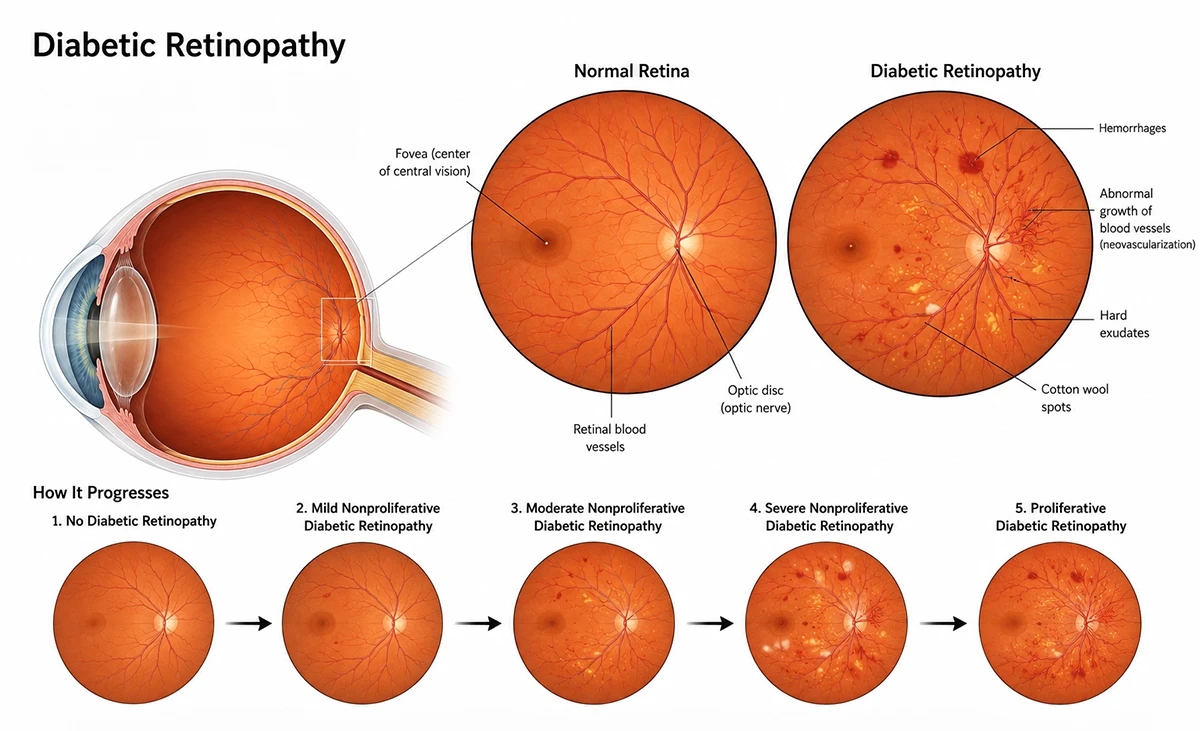
Diabetic eye disease refers to a group of ocular complications arising from diabetes mellitus, the most common of which is diabetic retinopathy. Chronic hyperglycaemia damages the retina's microvasculature, weakening capillary walls and leading to microaneurysms, haemorrhages, and vascular leakage. Over time, this can progress to diabetic macular oedema (swelling of the central retina) or proliferative diabetic retinopathy, where abnormal new blood vessels grow on the retinal surface. These fragile vessels can bleed into the vitreous or cause tractional retinal detachment, leading to severe vision loss. Diabetes also increases the risk of cataract, glaucoma, and ocular surface disease.
Symptoms of diabetic eye disease
Early stage diabetic retinopathy is typically asymptomatic, which is why regular eye examinations are essential. As the disease progresses, patients may experience:
- Blurred or fluctuating vision
- Dark spots or floaters
- Empty areas in the visual field (scotomas)
- Difficulty reading or recognising faces
- Colours appearing washed out or faded
- Sudden vision loss if vitreous haemorrhage or retinal detachment occurs
Assessing diabetic eye disease
When you visit us at Sutherland Eye Surgeons, some of the tests that we perform may include:
Visual acuity testing
Assessment of your best corrected visionSlit lamp examination
Evaluation of the anterior segment and lens for cataract formationDilated fundal examination
Drops are instilled to dilate your pupils, allowing thorough examination of the retina, macula, and optic nerve for signs of retinopathy, including microaneurysms, haemorrhages, exudates, and neovascularisationOptical coherence tomography (OCT)
Non invasive imaging that provides cross sectional images of the macula to detect and quantify diabetic macular oedemaFundus photography
Colour photographs of the retina to document the extent of retinopathy and monitor progression over timeFluorescein angiography (FFA)
A dye is injected into a vein in your arm, and sequential photographs are taken as the dye passes through the retinal circulation to identify areas of leakage, ischaemia, and neovascularisation
Treatment of diabetic eye disease
Treatment depends on the type and severity of diabetic retinopathy. Early detection and optimal systemic control of blood sugar, blood pressure, and cholesterol are fundamental to slowing disease progression.
- Diabetic Macular Oedema
Anti-VEGF injections are administered directly into the vitreous cavity to reduce vascular leakage and macular swelling. These in rooms injections are typically given every four to eight weeks initially, with extension of intervals as the condition stabilises. In some cases, focal laser photocoagulation may be used to treat localised areas of leakage.
- Proliferative Diabetic Retinopathy
Panretinal photocoagulation (PRP) is a laser treatment applied to the peripheral retina to reduce oxygen demand and suppress the production of growth factors that drive neovascularisation. Anti-VEGF injections are also increasingly used as primary therapy for proliferative retinopathy.
- Vitreous Haemorrhage or Tractional Retinal Detachment
For patients with non clearing vitreous haemorrhage or tractional retinal detachment, vitrectomy surgery is performed to remove blood and scar tissue, relieve traction, and reattach the retina. This procedure may be combined with laser photocoagulation and, if necessary, silicone oil or gas tamponade.
Have you been told to monitor your eyes because you have diabetes?
If you have diabetes, regular comprehensive eye examinations are essential for early detection and preservation of vision. At Sutherland Eye Surgeons, we offer in rooms treatments such as anti-VEGF injections and laser therapy that can control diabetic eye disease and help you avoid the need for more invasive surgery.
For all appointments and enquiries, please phone 02 9521 8402
Monday
Tuesday
Wednesday
Thursday
Friday
8:30am – 5:00pm
8:30am – 5:00pm
8:30am – 5:00pm
8:30am – 5:00pm
8:30am – 5:00pm
Suite 5, Level 1
570 President Ave
Sutherland NSW 2232
Website by: 