

Dermatochalasis
Excess skin of the eyelids
At Sutherland Eye Surgeons, we provide specialist assessment and treatment for dermatochalasis, which can affect eyelid appearance and in severe cases, interfere with vision.
What is dermatochalasis?
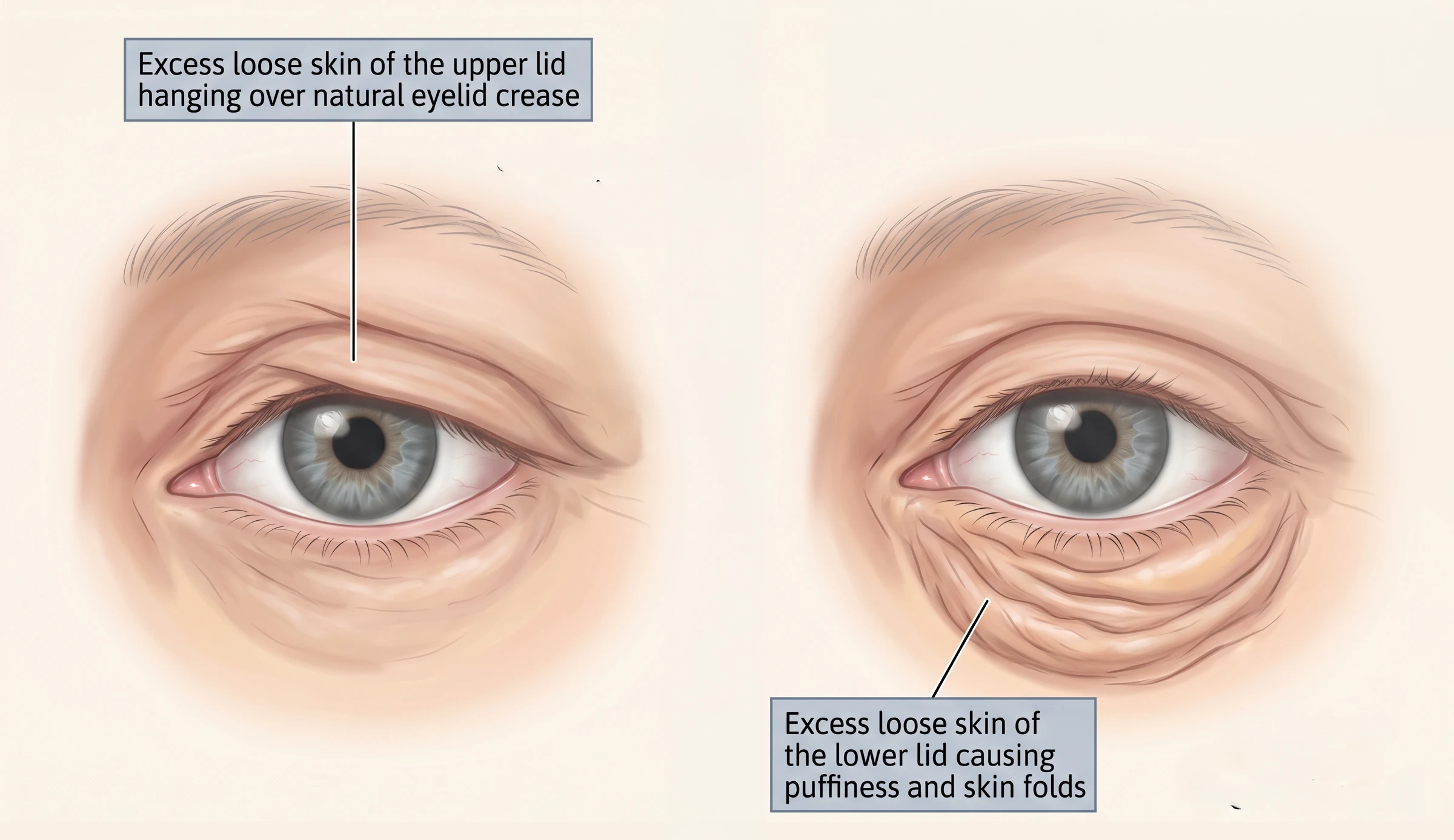
Dermatochalasis is an age-related condition characterised by excess, loose skin of the upper or lower eyelids. Changes in the supporting tissues and protrusion of orbital fat can also contribute to fullness around the eyes, creating a heavy or tired appearance.
Dermatochalasis commonly affects both upper and lower eyelids. In the upper eyelids, excess skin may hang over the natural eyelid crease and, in more significant cases, extend over the eyelashes or interfere with the upper field of vision. Lower eyelid changes may cause puffiness, skin folds and a fuller appearance beneath the eyes.
Symptoms of dermatochalasis
Symptoms vary depending on the amount of excess skin and the structures affected. They may include:
- Excess upper eyelid skin – Loose skin folding over the natural eyelid crease or resting on the eyelashes
- Heavy or tired eyelids – A sensation of heaviness, particularly later in the day or during activities requiring sustained visual concentration
- Visual field obstruction – Reduced upper or peripheral vision when excess skin hangs over the visual field
- Eye fatigue and brow strain – Increased effort to keep the eyes open or a tendency to raise the eyebrows to compensate for heavy upper eyelids
- Lower eyelid fullness – Puffiness or prominent folds beneath the eyes due to excess skin and protruding orbital fat
Assessing dermatochalasis
When you visit us at Sutherland Eye Surgeons, we will assess your condition by:
Eyelid examination
Assessment of the amount and distribution of excess skin, eyelid folds, orbital fat prominence and the position of the upper and lower eyelids.Assessment of eyelid position
Examination of the upper eyelid margin and the muscles responsible for lifting the eyelid to distinguish dermatochalasis from ptosis or identify when both conditions are present.Visual acuity assessment
Measurement of your vision to identify any changes that may require further investigation.Visual field testing
Where upper eyelid skin may be obstructing vision, visual field testing can assess the extent of any functional impairment. Testing may be performed with the eyelid in its natural position and, where appropriate, with the excess skin lifted.Ocular surface assessment
Examination of the eye surface and eyelid closure, particularly if you experience dryness, irritation or watering. This is important when considering eyelid surgery, as treatment can affect eyelid closure and ocular surface symptoms.
Treatment of dermatochalasis
- Upper eyelid blepharoplasty
Upper eyelid blepharoplasty is a surgical procedure that removes excess skin from the upper eyelids. Depending on the individual anatomy, a small amount of underlying tissue or protruding orbital fat may also be addressed. The incision is generally placed within the natural eyelid crease to help minimise visible scarring.
Surgery may be considered when excess skin causes significant heaviness, interferes with the upper visual field or produces concerns about eyelid appearance. Where vision is affected, clinical examination and visual field testing may help establish the functional impact.
- Lower eyelid blepharoplasty
Lower eyelid blepharoplasty may be considered when excess skin and prominent orbital fat contribute to lower eyelid bags or folds. Depending on the findings, surgery may involve removing or repositioning fat and addressing excess skin.
The appropriate technique depends on the amount of skin excess, the position and support of the lower eyelid, and other anatomical factors. Lower eyelid surgery requires careful assessment because excessive skin removal can contribute to eyelid retraction, difficulty closing the eyes or exposure-related dryness.
- Management of coexisting ptosis
If the upper eyelid margin itself is abnormally low, ptosis may be contributing to the symptoms in addition to dermatochalasis. In these cases, treatment may need to address both conditions rather than removing excess skin alone.
Are your eyelids affecting your vision or appearance?
If you feel like your eyelids are heavy or drooping, they may be able to be addressed. Contact Sutherland Eye Surgeons today to schedule a comprehensive assessment.
For all appointments and enquiries, please phone 02 9521 8402
Monday
Tuesday
Wednesday
Thursday
Friday
8:30am – 5:00pm
8:30am – 5:00pm
8:30am – 5:00pm
8:30am – 5:00pm
8:30am – 5:00pm
Suite 5, Level 1
570 President Ave
Sutherland NSW 2232
Website by: 